laco seal
Department of Public Works
Go to DPW home
Bus
play video

Transportation

Airports

Goal

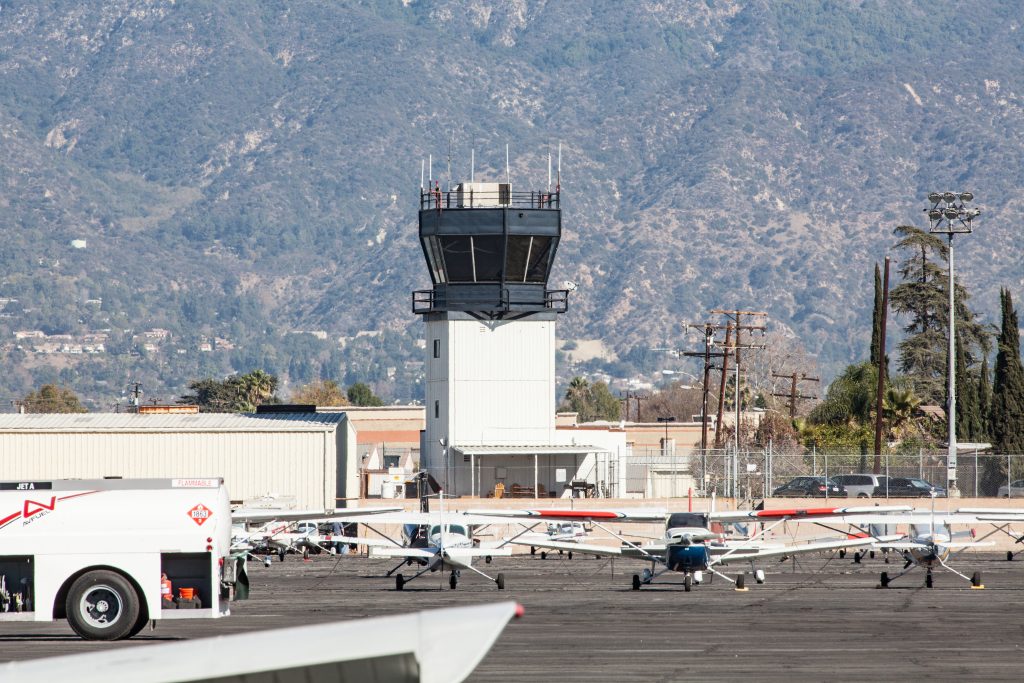
General aviation users (all users excluding only scheduled airline and military operations) for the County’s five general aviation airports have quality airport facilities and services to safely operate, store, and maintain their aircraft.

Desired Results

  • Maintain an overall Airport Customer Satisfaction rating of 3.5 or better.

Analysis

  • The annual customer satisfaction survey measures the following focus areas: overall service, assist locating other public services, timely processing of requests, courtesy and professionalism, knowledge, safety, security, general appearance, restrooms, public pilots lounge, flight planning facilities, availability of pilot supplies and aircraft services, restaurant, public viewing or recreation area, aircraft washing facilities, fuel facilities, condition of runways and taxiways, airfield lighting, marking, and guidance systems, and the public perception of the cost for services. Each of these metrics is measured independently and is used to derive an overall score, which currently exceeds the goal of 3.5 with an average of 3.62 out of 5.

Status

Overall Customer Satisfaction - 5 Points Possible

Actions

  • With an annual response rate of over 30 percent, the survey results are the principal tool consulted to initiate change and improvements. The results of the survey, and suggested corrections to low scoring areas, are shared with airport tenants and users. Past surveys have revealed customer satisfaction scores below the 3.5 goal in the areas of public use facilities, ADA access and improvements, airport safety and security, and aircraft and vehicular movement areas. Projects or programs to improve airport contractor performance and customer service in these areas have been implemented. Ongoing and future surveys will measure improvement in customer satisfaction in these areas, and other areas that might fall below the 3.5 goal.
Bikeways

Goal

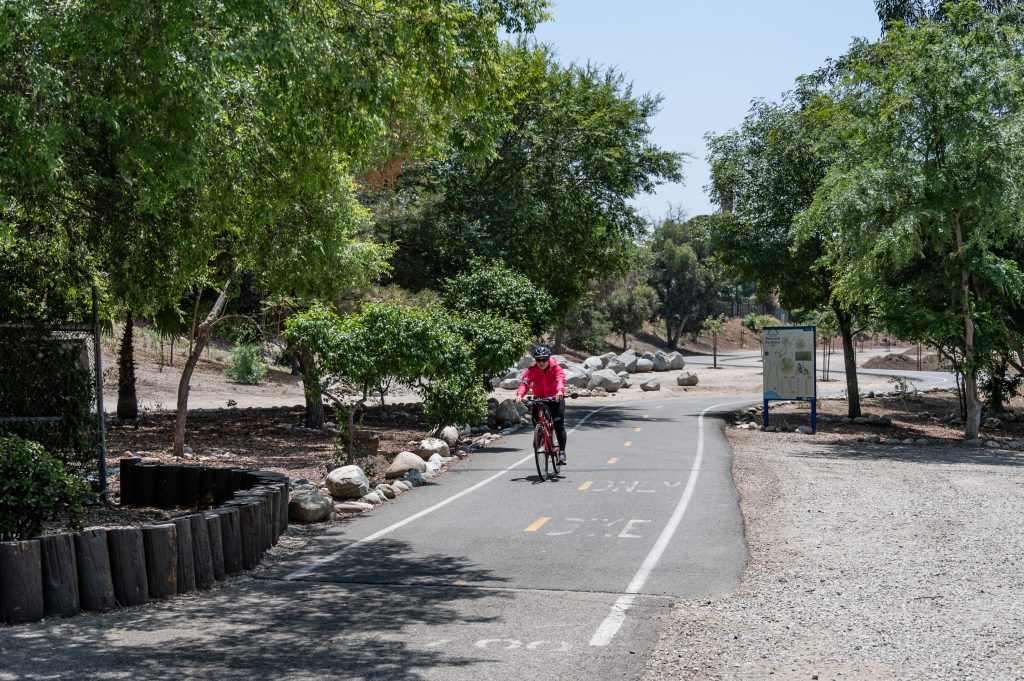
Promote intermodal transportation connectivity by implementing improvements identified in the new 2012 County of Los Angeles Bicycle Master Plan.

Desired Results

  • Increase the mileage of bikeways completed by an average of 40 additional miles per year through 2016-17 to meet the 204-mile implementation target for the 1st Five Years of the Bicycle Master Plan.

Analysis

  • The County of Los Angeles had approximately 144 miles of bikeways completed under a previous County Bicycle Plan. The new County of Los Angeles Bicycle Master Plan, completed in 2012, has approximately 817 miles of new, proposed bikeway facilities.

Status

County of Los Angeles Bicycle Master Plan - Miles of Bikeways

Actions

  • Conduct aggressive implementation of the Master Plan.
  • Provide Master Plan bikeway facilities that serve new or improved multi-modal transportation facilities/centers and areas targeted for the Healthy Communities initiatives in unincorporated County areas.
  • Strengthen transportation planning function to incorporate multi-modal advance planning and improve readiness for related grant programs to assist in funding implementation.
Congestion Management

Goal

Improve the capacity of the County’s 3,200 centerline miles (7,400 lane-miles) of unincorporated area roadways and intersections to maximize mobility.

Desired Results

  • 100 percent of monitored signalized intersections (15 total) rated as not congested (roadway Level Of Service D or better).

Analysis

  • LOS A: Traffic flows at or above the posted speed limit and all motorists have complete mobility between lanes.
  • LOS B: Slightly congested, with some impingement of maneuverability. Two motorists might be forced to drive side by side, limiting lane changes.
  • LOS C: Ability to pass or change lanes is not assured. Most experienced drivers are comfortable, and posted speed is maintained, but roads are close to capacity.
  • LOS D: Speeds are somewhat reduced, motorists are hemmed in by other cars and trucks.
  • LOS E: Flow becomes irregular and speed varies rapidly, but rarely reaches the posted limit.
  • LOS F: Flow is forced; every vehicle moves in lockstep with the vehicle in front of it, with frequent drops in speed to nearly zero mph.

Status

No. of 15 Monitored Signalized Intersections Rated as Not Congested

Actions

  • Monitor 15 signalized intersections included in County’s Congestion Management Program to determine if they are operating at Level of Service D or better.
  • Evaluate the non-conforming signalized intersections to identify and program the improvements required to enhance roadway capacity and address the congested condition.
  • Develop program to expand traffic data collection efforts along regionally significant arterial roadways.
  • Strengthen transportation planning function to incorporate Level of Service deficiencies and strategic initiatives for non-auto transportation modes, County Highway Plan activities, and improve readiness for grant programs to enhance capacity.
Local Public Transit

Goal

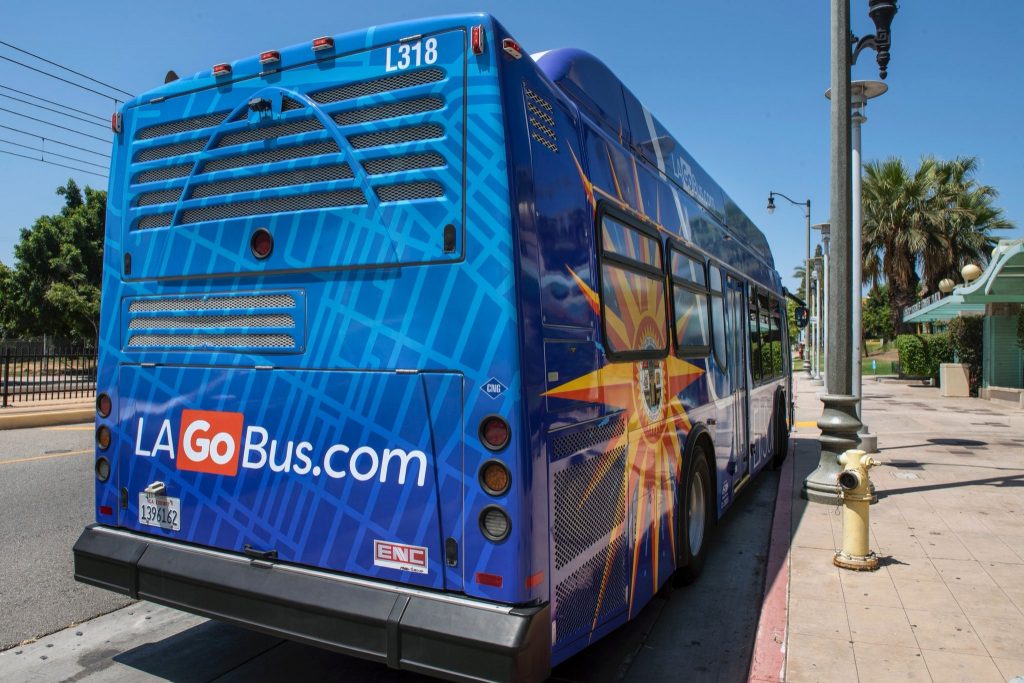
Provide effective and efficient local fixed route transit service (12 routes, 162 miles) and paratransit service in unincorporated areas that meets the needs of community residents and promotes intermodal transportation connectivity.

Desired Results

  • Consistently increase access to fixed route and paratransit services, achieve minimum patronage of 15 riders/hour for fixed route service and 2.5 riders/hour for paratransit service.

Analysis

  • Our measure of productivity is service patronage in riders/hour. We strive for a minimum of 15 riders/hr for fixed-route and 2.5 riders/hr for paratransit.
  • Since paratransit is costly compared to fixed-route, the goal is to increase the breadth of service to those needing it, while ensuring the scheduling of shared rides and a minimum of 2.5 riders per hour.

Status

Fixed Route Services

Paratransit Services

Actions

  • Continue to monitor, assess, and implement measures to enhance ridership, hourly patronage, and customer satisfaction.
  • Deliver new or improved transit service based on customer satisfaction feedback and needs, funding permitting.
  • Ensure local transit service is delivered to new or improved multi-modal facilities/centers in unincorporated County areas.
  • Strengthen transportation planning function to incorporate multi-modal advance planning and improve readiness for related grant programs.
Pavement Condition

Goal

Ensure that the County’s 3,200 centerline miles (7,400 lane-miles) of roadway pavements are free of major defects and in acceptable condition for all street and highway users.

Desired Results

  • 100 percent of Major and Secondary Highways in Los Angeles Basin rated as Good or Better (PCI 75 or better).
  • 100 percent of Local Streets in Los Angeles Basin rated as Good or Better (PCI 75 or better).

Analysis

  • Ratings based on Pavement Condition Index (PCI).

    PCI ratings:

    Excellent: 86 to 100
    Good: 75 to 85
    Fair: 58 to 74
    Poor: 40 to 57
    Failed: 0 to 39
  • Best Management Practices specify a PCI of 80 to 82 as the optimum pavement condition.

Status

Pavement Condition - Major and Secondary Highways

Pavement Condition - Local Streets

Actions

  • The Pavement Management System is being utilized fully for the development of a long term plan that includes pavement preservation, resurfacing, rehabilitation, and reconstruction.
Pedestrian Facilities

Goal

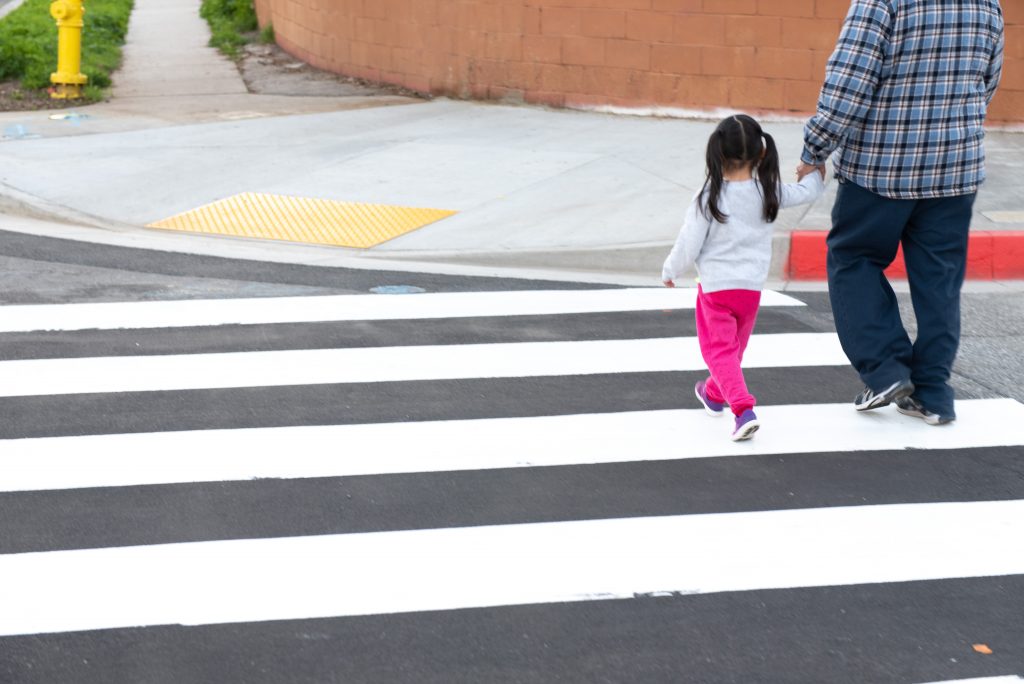
Provide pedestrian facilities and amenities in urban unincorporated areas that promote walkable communities and intermodal transportation connectivity.

Desired Results

  • Prepare Community Pedestrian Plans covering an unincorporated area population of approximately 30,000 per year.
  • Construct community pedestrian improvements consisting of approximately 25,000 lineal feet in Fiscal Year 2011-12 and a minimum of 15,000 lineal feet in subsequent fiscal years.

Analysis

  • A Pedestrian Plan has been completed for the West, South, and East Whittier unincorporated areas covering an unincorporated area population of approximately 89,900; a pedestrian plan has been drafted for the Azusa-Covina unincorporated areas covering a population of approximately 35,000.
  • Over 39,000 lineal feet of community pedestrian improvements were delivered in Fiscal Year 2010-11.
  • Approximately 16,000 lineal feet of community pedestrian improvements were delivered in Fiscal Year 2011-12.
  • Completed a framework for the development and implementation of Community Pedestrian Plans for County unincorporated communities.

Status

Community Pedestrian Plans and Improvements

Actions

  • Target the Transit Oriented Districts and Area and Specific Plans in the draft County General Plan Update for initial Community Pedestrian Plan development to promote intermodal transportation connectivity and community livability.
  • Target unincorporated areas under Healthy Community initiatives for Community Pedestrian Plan development in collaboration with the Departments of Public Health and Parks and Recreation.
  • Include construction of pedestrian improvements through the annual road construction program pursuant developed Plans.
  • Pursue grant program funding to construct Plan improvements such as Safe Routes to Schools and LA County MTA.
Safety (Collision Concentrations)

Goal

Operate and maintain the County’s 3,200 centerline miles (7,400 lane-miles) of streets, highways, and bridges to provide for safe operating conditions.

Desired Results

  • Reduce the number of County unincorporated collision concentration locations by 10% by 2020.

Analysis

  • Collision concentration locations are identified by comparing the number of accidents that occurred at a location with a set of criteria which identify locations with a recurrence of specific collision patterns over the latest 12-month period and any consecutive 36-month period within our five years of data. The top 5 percent locations are then referred to specific sections in Traffic and Lighting or other Divisions to identify and implement roadway improvements, traffic improvements, maintenance activities, or other countermeasures which can address the collision patterns.

Status

No. of County Clolision Concentration Locations

Actions

  • Identify collision concentrations annually, analyze the Top 5 Percent, and identify and implement roadway improvements, traffic improvements, maintenance activities, or other countermeasures which can address the collision patterns.
  • Strengthen highway safety improvement program planning to improve readiness for grant programs to implement identified safety improvements and countermeasures.
Last updated on 2/12/13