

ON THIS PAGE
Pacoima Reservoir Restoration Project
What to Expect
Major sediment removal work takes place during the non-storm season, from April 15 to October 15. During storm season, the reservoir will operate normally to provide flood protection and capture stormwater to replenish the local water supply.
During active work phases, nearby communities may notice truck traffic on designated routes, temporary noise, and dust control activity. Potential haul routes and sediment placement locations are being evaluated as part of the Program Environmental Impact Report (PEIR), with the draft expected in early 2027. Before work begins, Public Works will identify affected areas and routes, provide advance notice, and share updates as work progresses.
Project update
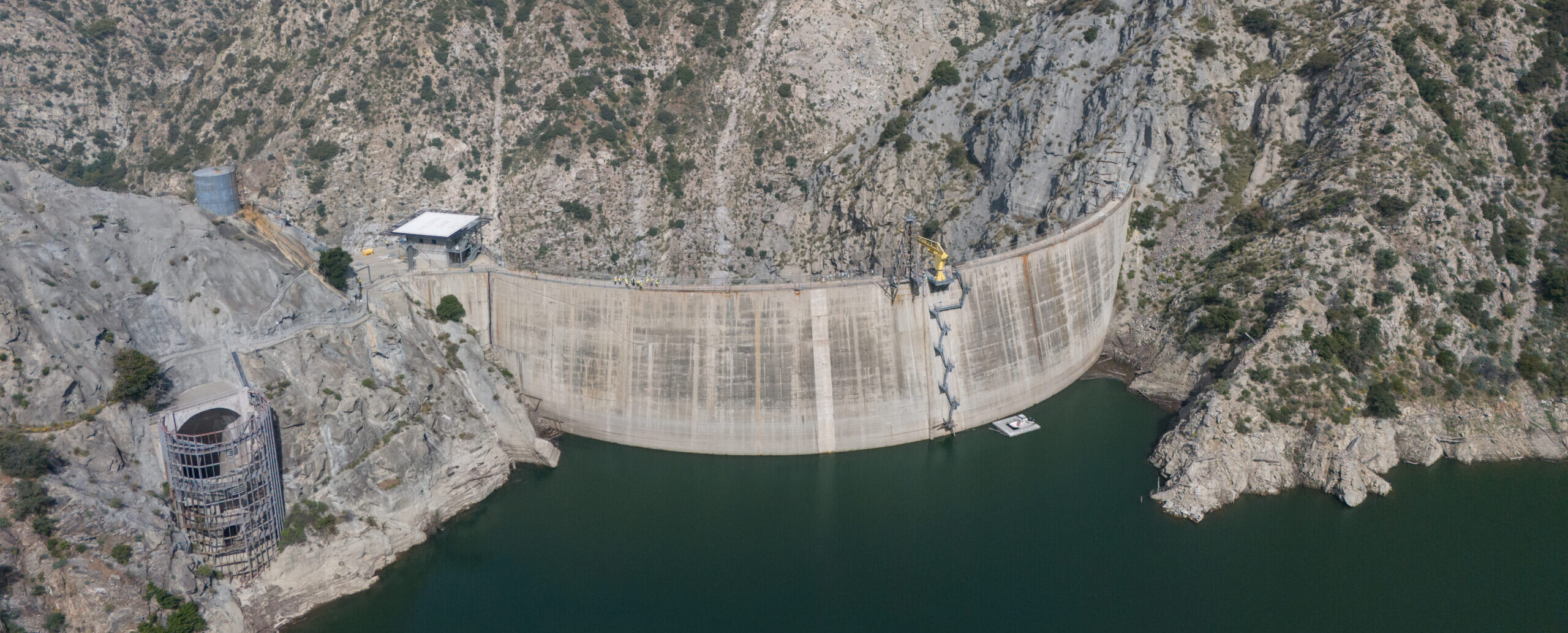
Los Angeles County Public Works is advancing the Pacoima Reservoir Restoration Project to remove sediment that has built up in the reservoir after years of wildfires and storms. Environmental review is underway, and future work will move forward following review, approvals, and coordination with partner agencies. Project timing will be coordinated with planned work at Big Tujunga Reservoir.
Timeline
Site Preparation and Construction Begins
Fall 2029
Phase 1: 1.5 million cubic yards (CY) of sediment will be removed over 5 years or less
Spring 2030
Phase 2: Additional 2.2-4 million CY will be removed over 10 years or less
Spring 2034
Understanding the Need for Sediment Removal
Pacoima Reservoir is part of LA County’s flood control system. The reservoir and dam are designed to reduce flood risk for downstream communities and capture stormwater for groundwater basin replenishment. As stormwater flows into the reservoir, it carries natural material like rocks, soil, sand, and vegetation. That material, called sediment, settles in the reservoir over time.
Wildfires increase sediment build-up because they burn away the vegetation that normally helps keep soil in place. At Pacoima, about 96% of the watershed has burned over the last two decades, which has led to much more sediment washing into the reservoir.

Vegetation
Trees, plants, and shrubs all have roots that hold sediment (rocks, mud and soil) in place.
Wildfires
When wildfires occur, vegetation is burned away. There are fewer roots to hold sediment in place.
Erosion
Storms carry sediment downhill and into reservoirs and debris basins.
That sediment takes up space the reservoir needs to capture stormwater for flood protection and to support groundwater recharge, which helps replenish local groundwater basins. Sediment can also block key outlet valves used to safely operate the dam. Removing sediment will restore needed space in the reservoir and keep the dam operating safely and reliably.
Why Action is Needed Now
Sediment accumulation has reduced reservoir capacity and is approaching a level that could affect dam operations. An additional 20 feet of sediment accumulation would block or impair the dam’s outlet valves, limiting the facility’s ability to provide flood control and water conservation releases.
Public Works is moving forward with the project to restore reservoir capacity and ensure the facility continues to function as designed, providing adequate flood protection for nearby communities. Increased capacity will also support greater stormwater capture, contributing to a sustainable local water supply, which is becoming increasingly important for the region.

Supporting Groundwater Recharge
Groundwater recharge happens when captured stormwater soaks into the ground and refills underground aquifers. That matters because groundwater provides about 30–40% of LA County’s water supply.
Restoring capacity at Pacoima Reservoir helps the system capture more stormwater and move it downstream to the Lopez Spreading Grounds and the Pacoima Spreading Grounds, where it can recharge the San Fernando Groundwater Basin and support water supply across the San Fernando Valley.
Since October 1, 2025, across all LA County stormwater capture facilities, the County has captured a record 122.7 billion gallons of stormwater, enough to meet the needs of about 3 million residents for a year. Pacoima Reservoir is one part of this larger countywide system.
Fire Response and Water Supply
Pacoima Reservoir is a flood control reservoir, not a drinking water reservoir. It is not connected to household taps or fire hydrants. While it has occasionally been accessed by aircraft for firefighting, that use is limited. Over the past 10 years, water for aerial firefighting operations has been drawn from Pacoima three times, all during 2021.
Most firefighting water, especially for neighborhood and structure fires, comes from municipal water systems, including hydrants, tanks, and pipelines operated by local water agencies. The reservoir is not part of this municipal water system. Moreover, fire response does not rely on a single source. Depending on what is safest and most effective, agencies draw from a broad range of regional water sources to support suppression efforts.
Public Works is coordinating closely with local fire agencies, such as LACoFD, to maintain fire response capabilities throughout this work. The County is developing a staggered approach to reduce the amount of time the Big Tujunga and Pacoima Reservoirs are drawn down at the same time, although some overlap may occur depending on the phase of work. The County is coordinating with fire agencies to identify alternate water sources for firefighting purposes during construction periods.
Frequently Asked Questions
Answers to common questions.
What is sediment?
Sediment is natural material from the surrounding hillsides, including rocks, soil, sand and vegetation. Under normal conditions, plants and trees help hold this material in place. After a wildfire, that vegetation is gone, and rain can wash large amounts of sediment into reservoirs and debris basins much more quickly. This is a natural process, but the scale has increased significantly due to wildfire activity in recent years.
Why is this project happening now?
The need for this project has been building for years, but recent wildfire activity has accelerated the problem. Fires in 2008, 2009, 2016 and 2017 burned approximately 96% of the watershed that drains into Pacoima Reservoir. Since then, storms have carried unprecedented volumes of sediment into the reservoir. The project is moving forward now to proactively address this buildup and ensure the facility continues to function as designed, providing adequate flood protection and maximizing stormwater capture to support a sustainable local water supply.
What happens if the sediment is not removed?
If sediment continues to accumulate:
- The reservoir will have reduced capacity to capture stormwater
- Flood risk could increase for downstream communities
- Critical infrastructure, such as outlet valves, could become blocked or impaired
Where will the sediment go?
Sediment will be transported to approved and permitted facilities. Potential placement sites and haul routes are being analyzed in the Program Environmental Impact Report. It is important to note that sediment is natural material, not hazardous waste.
Why does the reservoir need to be drained?
The reservoir will be drawn down only during the dry season (April 15 – October 15). Lower water levels allow crews to safely reach and remove accumulated sediment. During storm season, it will operate normally to manage stormwater, reduce flood risk and capture water for local supply.
Will this affect wildfire response or water availability?
No. This project will not diminish the region’s overall wildfire response capacity. Over the past 10 years, water for aerial firefighting operations has been drawn from Pacoima three times, all during 2021. Fire suppression depends on a broad network of municipal infrastructure, including hydrants, tanks, and pipelines operated by local water agencies. Pacoima Reservoir is part of the County’s flood control system, not the municipal drinking water system that supplies neighborhood fire hydrants.
The County will continue coordinating with local fire agencies to plan for and identify alternate water sources for firefighting during construction periods.
This project will improve long-term water reliability by increasing the reservoir’s capacity to capture stormwater, which is used to recharge groundwater basins that supply drinking water.
How long will the project take?
The project will be completed in two phases. Phase 1 will take five years or less, and Phase 2 will take 10 years or less. This phased approach will help manage environmental impacts, reduce strain on surrounding communities and maintain safe reservoir operations throughout the work.
What is happening right now?
Public Works is currently completing environmental review through a Draft Program Environmental Impact Report (PEIR), which is expected to be released in early 2027. The DPEIR will be available for public review and comments upon release. This process includes:
- Studying potential environmental impacts
- Evaluating haul routes
- Incorporating community feedback
No sediment removal is happening at this time.
Project Maps
Coming soon.
Resources
Contact & Stay Informed
Community input is an important part of the process. Residents can sign up for project updates. Public Works will continue to provide updates as the project progresses.

LA County Public Works 24-hour Dispatch Center
800-675-HELP (4357)

LA County Public Works